Interoperability of smart metering data with use of standards is the new rule in the European Union
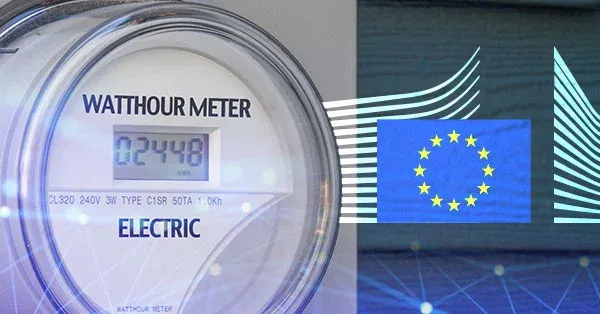
Smart metering interoperability standards and LoRaWAN® in the EU: what you need to understand.
LoRaWAN® with support for the key metering standards DLMS and M-Bus is becoming an essential element of compliance and of interoperability between smart metering vendors for European utilities.
With the new regulation adopted by the European Commission on 6 June 2023 on “interoperability requirements and non-discriminatory and transparent procedures” for access to metering and consumption data, the European Union has taken a significant step towards greater energy efficiency and transparency in the electricity sector. The rules are meant to empower consumers and bring a greener and more sustainable energy future closer, while recognising the difficulties of interoperability and stressing the many benefits of consumer access to such valuable information.
Source: energy.ec.europa.eu
One of the key difficulties in implementing the rules is making different energy data systems compatible. Many energy suppliers and technologies operate in the EU, so harmonising the collection and provision of data is a complex task. Recognising this, the European Union stresses the importance of common standards and protocols that allow metering and consumption data to be exchanged freely between systems. In fact, most existing smart metering deployments in Europe rely on two key standards: DLMS and M-Bus.
Overcoming the interoperability difficulties in smart metering.
The rules are the result of long development and consultation with stakeholders: the new provisions must cover all the necessary questions and be workable in practice. Under them, consumers must have simple access to their metering data and be able to allow third parties to use data on their consumption or generation for their benefit. The aim is to protect consumers and at the same time make them active participants in the energy transition.
What the new rules change for consumers and the energy market.
Consumers gain several advantages: they can compare their consumption with that of their neighbours and assess the prices of different suppliers, which strengthens competition in the retail energy market. This encourages innovative and efficient solutions, such as demand response and the integration of renewables, which in the end lowers costs and improves the quality of service. Beyond the benefits for individual consumers, the rules have wide consequences for the whole energy sector and are an important milestone in the EU’s effort to build a more transparent, efficient and consumer-centred market.
The European Commission calls these rules the first in a series of regulations to be adopted over the next two years for the interoperability of energy consumer data. The next ones will cover data on supplier switching, demand response and other services.
By addressing interoperability, the EU aims to ensure fair competition and the integration of the energy market, and to give consumers full information for informed decisions.
The future of interoperability of energy consumer data.
By adopting these rules, the EU is trying to solve the compatibility problems of smart metering across all member states. Interoperability is a multi-dimensional and increasingly cross-sector task. Electricity is not the only sector that faces it: the same need exists in healthcare and public administration. Other ecosystems, such as electric mobility and building management, expect access to metering and consumption data for easier integration and management of charging stations, and of microgrids with solar panels and energy storage.
Data privacy and security also remain key topics: they are what most often limits the adoption of any interoperable solution. Smart metering compatibility is also affected by the lack of consent mechanisms, by the granularity of the data collected and by the distribution of roles and responsibilities among the organisations that manage and process the data. That is why the new rules focus on defining a common reference model with the roles and responsibilities of the parties.
A five-layer model as the answer to interoperability.
The adopted principle is a five-layer model that separates a common reference model, which provides interoperability at European level, from a national model built on a list of standards.
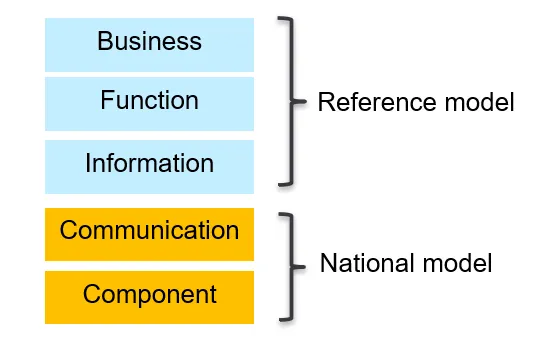
The common reference model is a set of reference procedures for data access and of the necessary information exchange between market participant roles. It covers the business, function and information layers, while the two remaining layers, communication and component, are defined at national level to reflect local specifics and practice.
The reference model describes workflows for specific services and procedures on the basis of a minimal set of requirements that guarantees the correct execution of a procedure and allows national adaptation.
It consists of a “role model” with a set of roles, responsibilities and their interactions; an “information model” with information objects, their attributes and relations; and a “process model” describing the steps of the procedures. The model is technology-neutral and is not tied to particular implementation details.
Within 24–36 months (for member states still moving to smart metering), each country must present its national reference model and practice, with procedures for data access and exchange between market participants. As stated in the annex to the implementing act, a national model may use one of the approved standards for metering data exchange:
- the EN 62056 series: DLMS/COSEM;
- the EN 13757 series: wired and wireless M-Bus;
- EN 50491-11;
- EN 16836: Zigbee SEP 1.1.
The first two standards are the main references for smart metering; the other two are norms for home and building electronic systems. EN 50491-11 is used for presenting metering data on an external consumer display, and EN 16836 for wireless mesh networks for meter data exchange (Zigbee is used only over short distances and never in wide-area networks).
The good news is that LoRaWAN, as the leading LPWAN technology, is fully ready to support the DLMS and M-Bus standards prescribed by the new European rules. And the effect is not limited to electricity metering in Europe: these key standards have spread worldwide and cover smart metering of all kinds, including electricity, water, gas and heat.
The role of LoRaWAN and the key standards in smart metering
M-Bus and DLMS are key standards that Semtech’s LoRa Basics Modem software platform supports on many LoRa hardware platforms. Meter manufacturers can use Semtech’s LoRa software and hardware platform to implement the official adaptation layers required by M-Bus and DLMS applications.
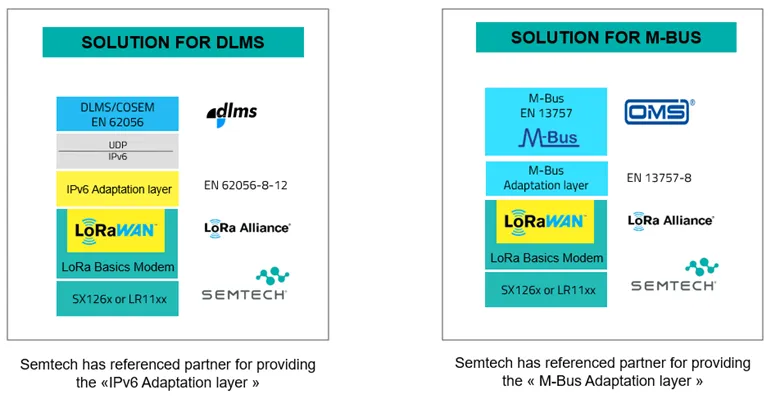
Existing implementations and demonstrations have been verified with partners and are covered in the Semtech webinar “Smart Metering with LoRa Basics Modem”.
Semtech and the LoRa Alliance: pioneers of smart utility systems.
The LoRa Alliance defined the IPv6 adaptation layer needed to support the DLMS profile in LoRaWAN. The DLMS association then handed the new profile to the standardisation bodies. After review and voting, the European Committee for Standardization and the International Electrotechnical Commission (IEC) standardised the DLMS profile for LoRaWAN as EN 62056-8-12 in the European norm and IEC 62056-8-12 in the international IEC standard.
The future of smart metering with LoRaWAN and the new EU rules.
In addition, the LoRa Alliance and OMS jointly defined the M-Bus adaptation layer (MBAL) for LoRaWAN. The cooperation, started in 2019, ended with OMS approving technical report TR06. After thorough review and voting in 2023, the European Committee for Standardization (CEN) officially standardised and extended the M-Bus adaptation layer (MBAL) for third-party networks as EN 13757-8:2023. Among LPWAN technologies, LoRaWAN was the first to reach this milestone, as confirmed by OMS and shown by the LoRa Alliance at the public ENLIT event in 2021.
Utilities can now require the use of these reference standards together with LoRaWAN in smart metering tenders, to follow the direction set by the new rule. By deploying LoRaWAN with support for the new standards, you ensure regulatory compliance and get interoperability, seamless integration and future-proof solutions.
Semtech, the Semtech logo and LoRa® are registered trademarks or service marks of Semtech Corporation or its subsidiaries.
Source: tech-journal.semtech.com